When I first read the listing for Matilda, I was disappointed: what a shame that someone had to go on and ruin one of my favorite books by turning it into a musical. Then I found out that it was the Royal Shakespeare Company's production and my dismay turned to disgust: how dare such a high quality organization as the RSC defile one of my favorite books! But that disgust was tinged with curiosity. I mean, if it was the RSC, it couldn't be that bad, could it?
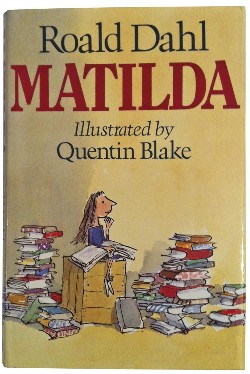
Matilda and I go way back, so I am naturally protective of her reputation. I first met her in third grade where she was the read-aloud book chosen by my teacher, Mrs. Clegg, an amazing educator who understood that people who can read still like to be read to – especially if you do it with the voices! The other book we read aloud that year was A Wrinkle in Time. Those two books remain for me the highlights of all children's literature and you can bet anything they'll be on my kids' bookshelves someday.
As I got more used to the idea of Matilda as a musical, the idea grew on me. In some ways it's prefect: an overly dramatic story, characters who are caricatures, and just a little bit of magic. So tonight I finally went to judge for myself. The show is offering eight tickets for 16-25 year olds at only £5 apiece. When I arrived at the theatre I was actually upgraded to empty seats in the orchestra– er, stalls. Right. Anyway excellent seats that should have cost almost ten times what I paid for them.
As you enter the theatre the first thing that strikes you is the stage. The stage, proscenium, and walls of the house look like blackboards onto which a mixture of novelty Scrabble sets have been dumped. As the show goes on you see that Scrabble tiles and alphabet blocks are the major scenic element. And the rest of the show was just as innocently nostalgic. The children were charming and weird, the parents were abrasive and ridiculous, but what impressed me the most was just how much the characters looked like the Quentin Blake illustrations from the book. I was particularly struck by how much the actor playing Miss Trunchbull looked like the picture: the high bun, the short skirts, the humpback and flattened, droopy breasts. Something about the hands, maybe it was just that the part was played by a man so the scale was different, maybe it was something about how he held them, but the hands looked just as cartoonish as the illustrations.

Visually the production was stunning, and the story was ok. Like the movie there was plenty here that strayed from the text. The script focuses on the major episodes you remember from the book - the peroxide, the superglue, the newt in a cup, the chocolate cake - and simplifies the rest of the story. Matilda also becomes a storyteller, regaling the librarian with an episodic tale of circus performers and the daughter they love, which we eventually learn is Miss Honey's story that Matilda has picked up... telepathically? It's a weird leap, but at least they don't have Matilda breaking into Miss Trunchbull's house and setting traps like a reverse Home Alone.
The script sometimes seems to be merely filler to remind you of the story you already know in between elaborate song and dance numbers – but what songs! what dances! What the show loses in plot, it makes up in spirit. It's smart. It knows it's material and it knows where it comes from. I laughed at the cheeky Dead Poet's Society moment and groaned at the tribute to Spring Awakening. But the idea is clear: this is above all a story about school, for everyone who has ever felt like they didn't fit in. From the moment you walk in and see the colored chalkboards that decorate the lobby and invite kids to draw on them, to the curtain call on scooters, the show is sweet and charming and just as fun to watch as the book was to read. I smiled through the entire closing number and left the theatre feeling warm and happy. It might be different from the book, but I feel like my Matilda is safe in their hands.
But let's not do a musical of A Wrinkle in Time, ok?


